
In the dazzling world of cosmetics, all stunning surface effects — from brilliant metallization to silky-smooth coatings — rely on one essential carrier: the molded plastic part.
Injection molding is the core process behind this foundation, determining the packaging’s structural integrity, functionality, production efficiency, and ultimate cost.
It is the hidden battlefield for brand product strength and profitability.
I. The Essence of the Process: Precision Replication, Large-Scale Manufacturing
Injection molding is a highly efficient process in which molten plastic is injected into a precision mold cavity, cooled, solidified, and shaped into the desired form.
Its biggest strengths lie in high repeatability and extreme scalability — once a mold is developed, it can produce millions of parts with consistently high quality.
Core Process Flow
Clamping: The movable and fixed molds are tightly closed under high speed and pressure.
Injection: Plastic granules are heated, melted, and injected into the mold cavity at high pressure and speed.
Holding Pressure: Constant pressure is applied to compensate for shrinkage during cooling, preventing sink marks and deformation.
Cooling: The product cools and solidifies inside the mold cavity.
Mold Opening & Ejection: The mold opens and the part is ejected by the ejector system, ready for the next cycle.
II. Key Decision Points: Four Factors Affecting Packaging Quality and Cost
For brands and purchasing teams, understanding the fundamentals of injection molding is crucial to achieving cost efficiency, quality consistency, and production reliability.
1. Material Selection: Balancing Performance and Cost
Different plastic materials define the physical and chemical performance of cosmetic packaging — and are the foundation of smart design decisions.
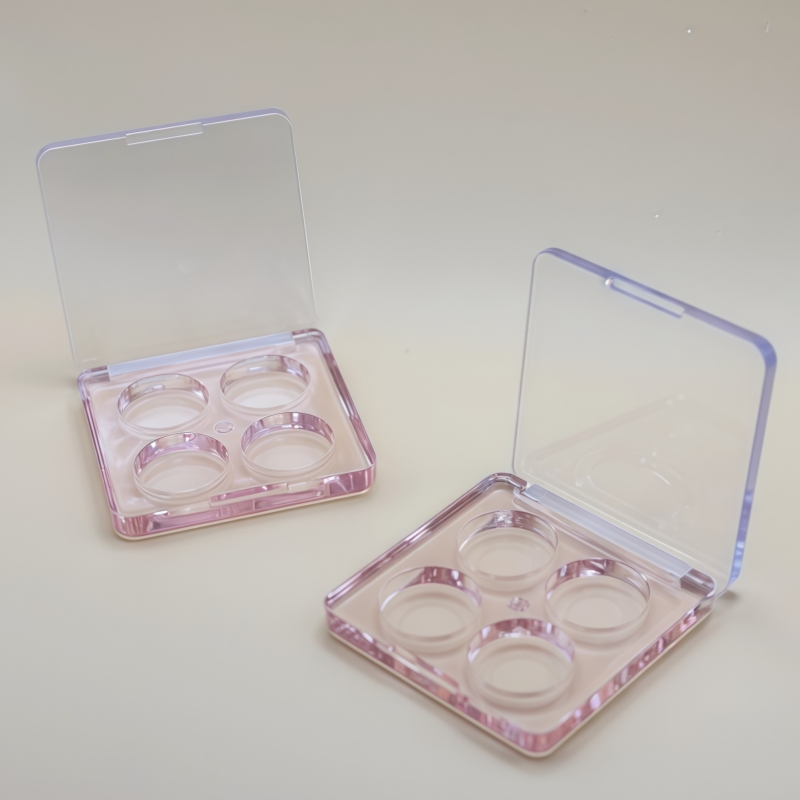
ABS – A strong engineering plastic with excellent rigidity and overall performance. It supports secondary processing such as painting and electroplating, making it ideal for lipstick tubes, powder compacts, and other premium cosmetic packaging.
AS – Offers high transparency, hardness, and scratch resistance, but is relatively brittle. Commonly used for transparent windows or clear bottles where contents need to be visible, though less suitable for impact-prone structural parts.
PETG – A high-transparency, tough, and chemically resistant copolyester that’s easy to mold. Perfect for lotion bottles, cream jars, and other packaging requiring durability and clarity. It’s also compatible with screen printing and hot stamping.
PP – Known for excellent chemical resistance, flexibility, and low cost, making it a staple material for daily chemical packaging and simple cosmetic containers. Its low surface energy often requires flame or corona treatment to improve coating or printing adhesion.
2. Molds: One-Time Investment, Long-Term Returns
The mold is the heart of injection molding — its precision and quality directly define product consistency and cost efficiency.
Mold Steel: High-grade materials such as S136 and NAK80 ensure long service life and dimensional stability.
Mold Flow Analysis: Using CAE software to simulate flow behavior before production helps optimize gate design, runner layout, and cooling — reducing shrinkage, warpage, and surface defects.
Mold Structure: Advanced mechanisms like sliders or angled lifters make it possible to form complex shapes, undercuts, and side openings — giving designers greater freedom.
3. Equipment and Process Control: Ensuring Stability
High-performance injection molding machines and precise process parameters are essential to maintain consistent quality.
Stable temperature, pressure, and injection speed ensure that every molded product is as perfect as the first.
III. Laying the Foundation for Subsequent Processes: Design and Collaboration
Injection molding quality directly impacts all subsequent surface treatments such as spraying, plating, or printing.
Shrinkage and warping may cause uneven coatings or surface distortion.
Weld lines can become visible after metallization or coating, affecting appearance.
Solution: Early-stage collaboration with your packaging supplier and mold engineer is crucial.
By applying DFM (Design for Manufacturability) principles — including optimal wall thickness, rib placement, and gate positioning — you can prevent potential issues from the start.
Conclusion: Excellent Packaging Begins with Excellent Molding
Injection molding is far more than just plastic forming.
It is an integrated science combining materials engineering, precision mechanics, fluid dynamics, and intelligent control.
Choosing a packaging partner with strong mold development capability, deep materials expertise, and strict process management gives your product a powerful edge in structure, cost, and quality.
When envisioning the next innovative eyeshadow palette, or perfecting the smooth motion of a foundation pump, remember —
it all begins with injection molding.
Collaborate closely with your suppliers to create a foundation that is both strong and beautiful.
